
The Environment as Clinical Infrastructure
Healthcare leaders increasingly recognize that patient outcomes are influenced not only by clinical expertise, but by the environment in which care is delivered. As hospitals grow vertically and campuses become denser, access to restorative green space is often limited, particularly for patients confined to beds or extended stays.
Green roofs offer a practical way to extend healing environments upward, transforming underutilized rooftop space into visible, therapeutic landscapes that support recovery. For healthcare organizations focused on patient-centered care, this is not aesthetic enhancement, it’s a component of integrated healthcare.
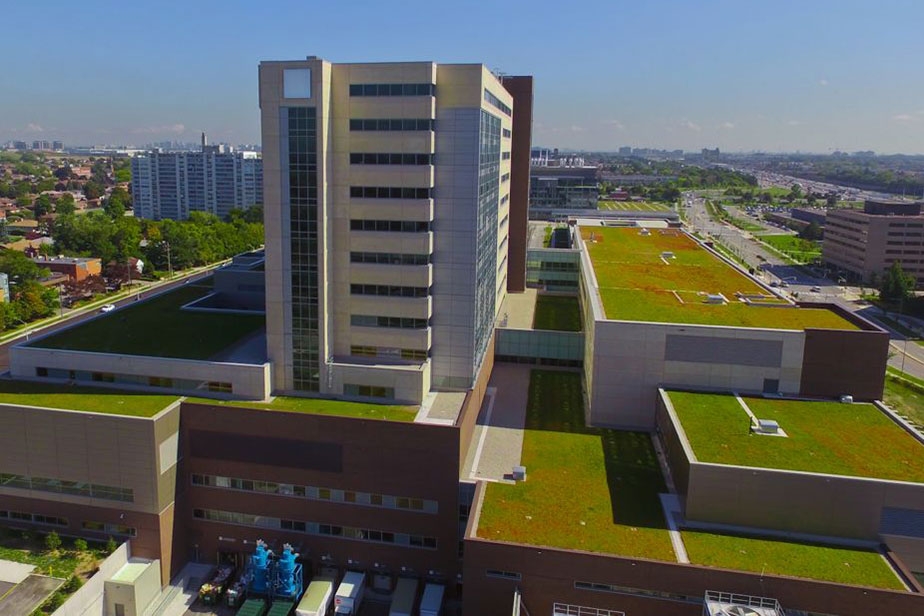
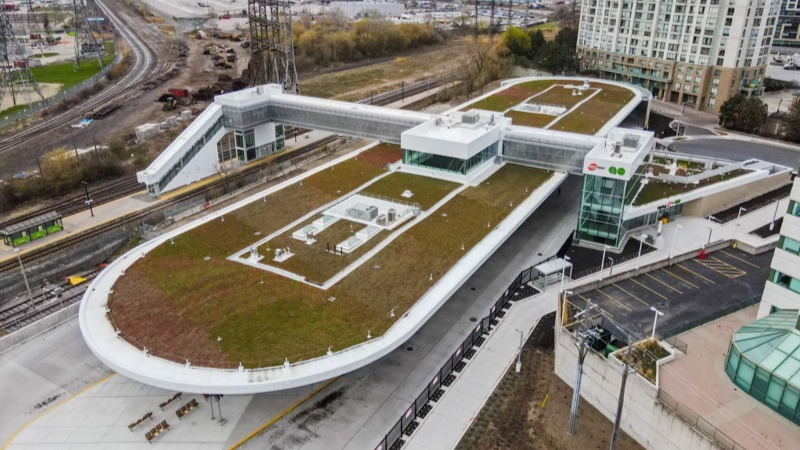
Humber River Hospital | Toronto, ON
Restorative rooftop views supporting patient recovery and experience.
What Research Shows
More than four decades ago, Roger Ulrich’s landmark study demonstrated that surgical patients with views of trees recovered faster, required fewer pain medications, and experienced fewer complications than patients facing built structures (Ulrich, 1984). Subsequent research has reinforced these findings. Exposure to natural environments has been associated with:
- Reduced stress and anxiety
- Lower blood pressure
- Improved mood
- Higher patient satisfaction scores
- Shorter recovery times
- Less dependent on pain killers
(Ulrich et al., 2008)
Importantly, patients do not need physical access to nature to benefit. Visual exposure alone produces measurable physiological and psychological effects. For healthcare executives, this reframes green space as more than an amenity, it becomes a contributor to patient experience metrics and recovery support.
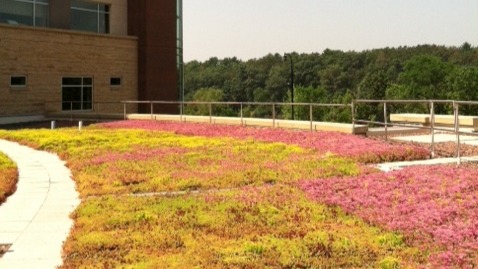
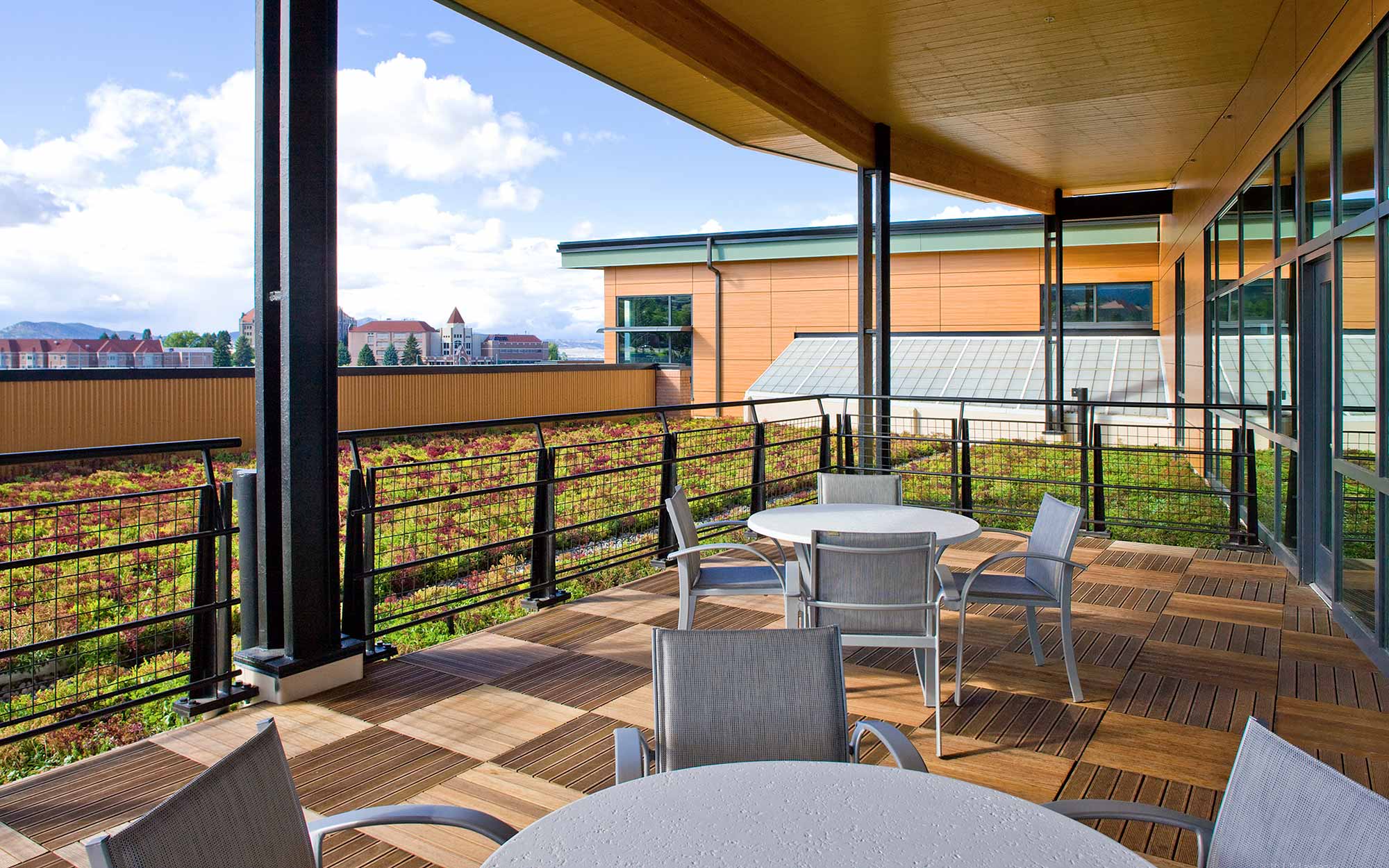
The Mayo Clinic | Rochester, MN
Integrated green roof bringing nature into a vertical medical campus.
Biophilia and Patient-Centered Care
The concept of biophilia, the innate human connection to nature, has become foundational in modern healthcare design. For patients navigating pain, uncertainty, or long-term treatment, views of living landscapes offer:
- Emotional support
- Positive distraction
- Reduced feelings of isolation
- A sense of continuity beyond the clinical setting
These effects are particularly meaningful in pediatric, oncology, rehabilitation, and long-term care environments, where emotional well-being significantly influences the overall experience. When access to ground-level gardens is not feasible, rooftops provide an opportunity to deliver these benefits directly adjacent to patient rooms and care units.
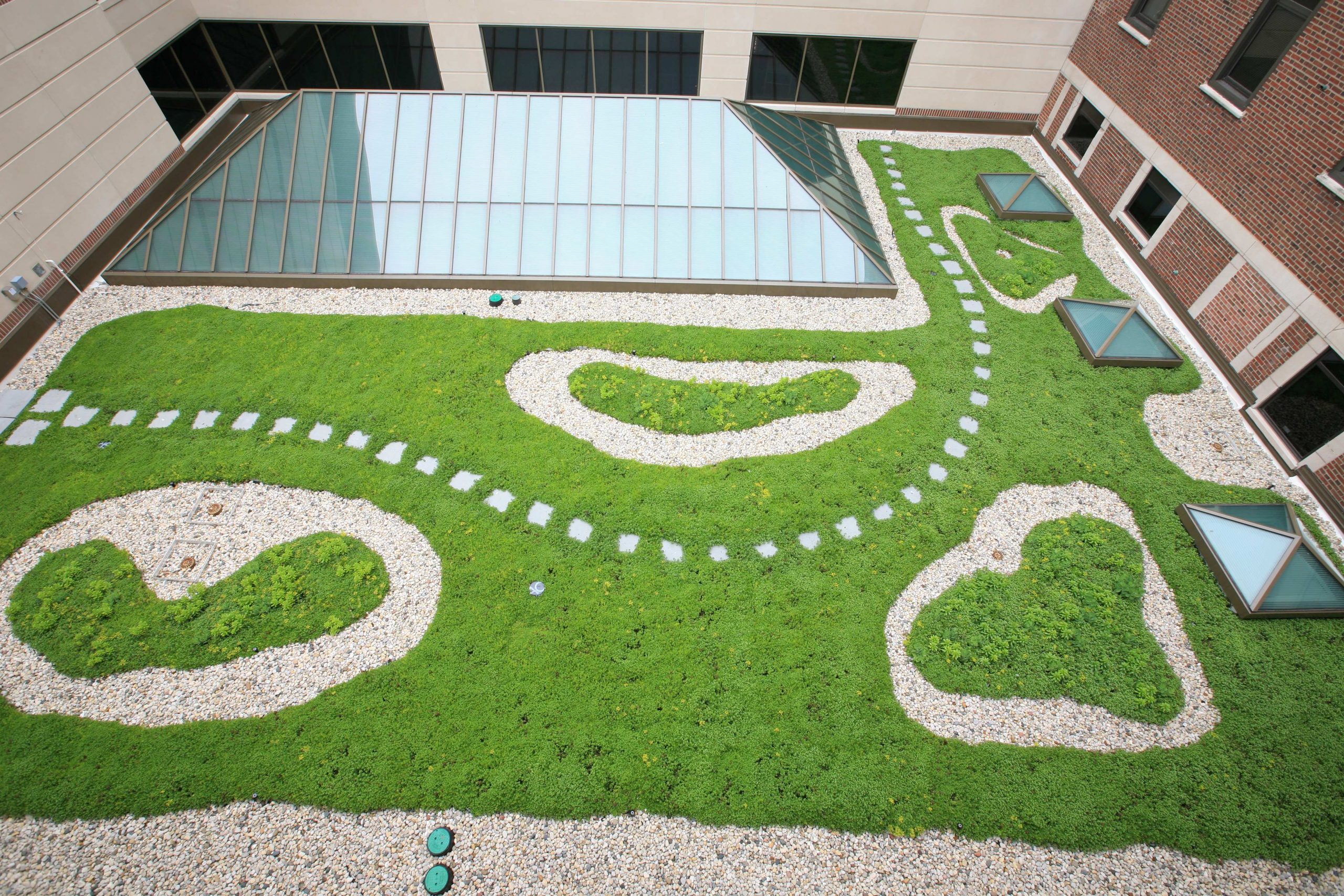
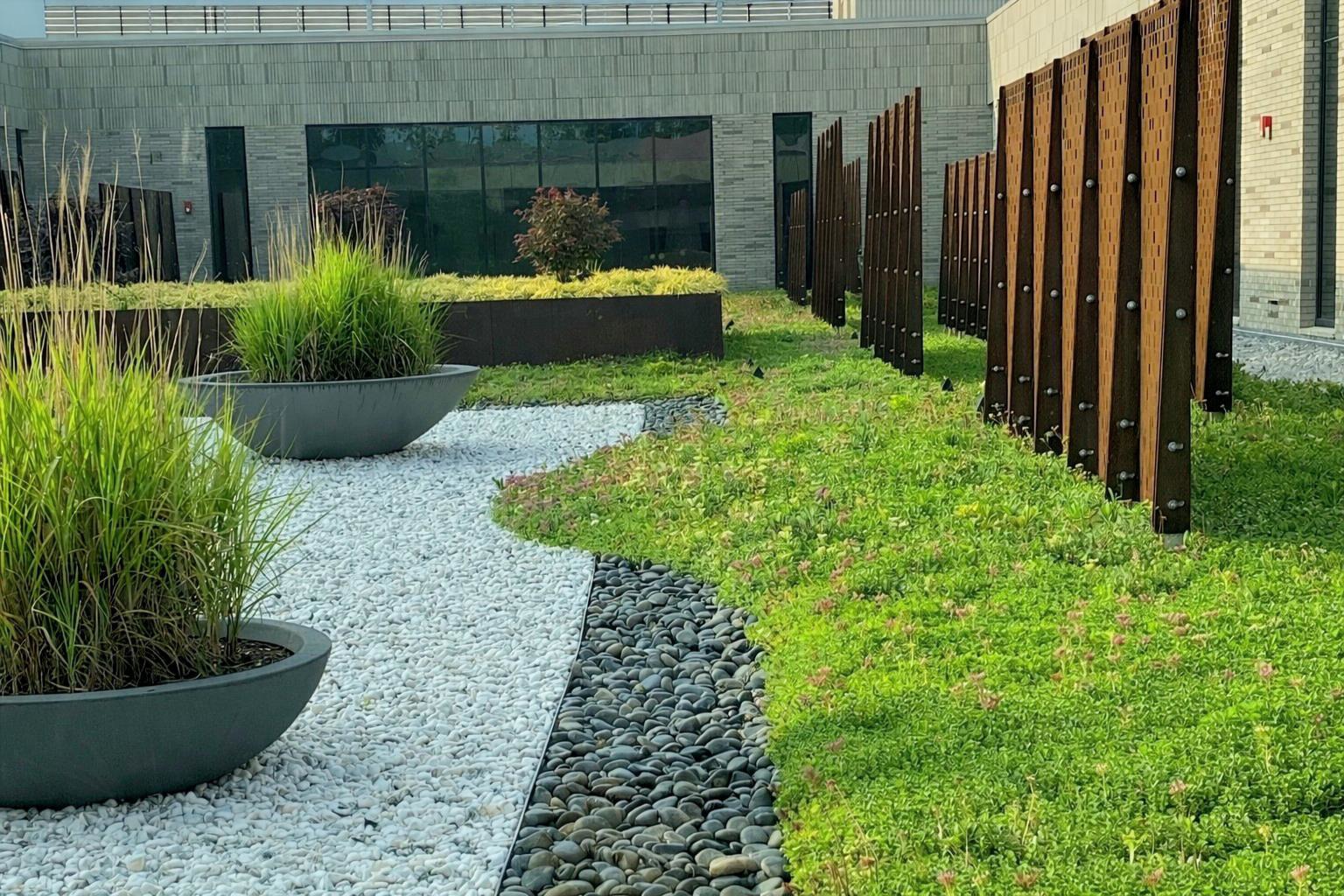
Kellogg Cancer Center | Evanston, IL
Seasonal rooftop garden reinforcing healing-centered oncology design.
Turning Roof Surfaces into Healing Landscapes
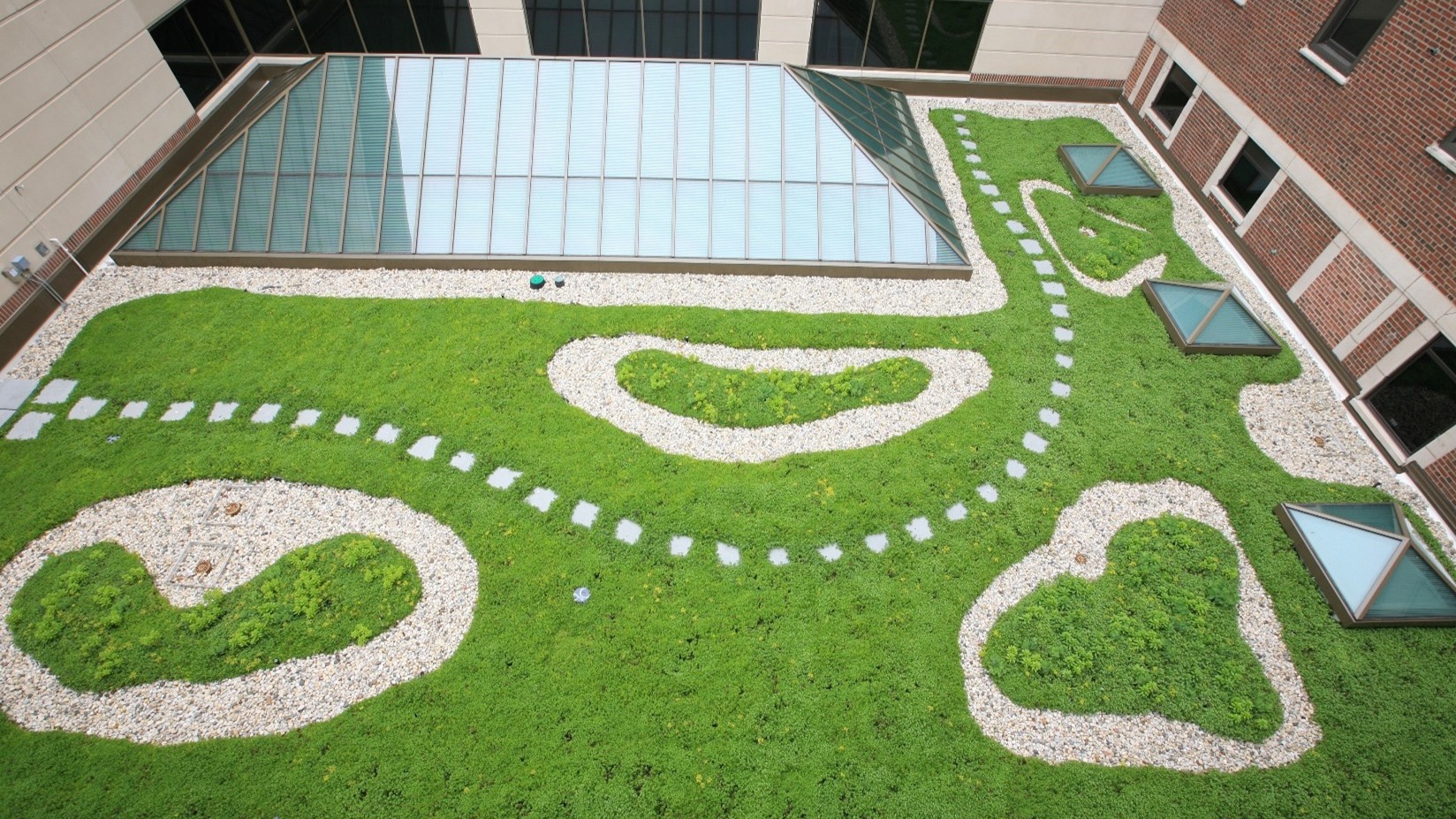
In many facilities, patient rooms overlook large expanses of traditional roofing — often filled with mechanical equipment and tar or rubber covered membrane surfaces. Transforming these areas into vegetated landscapes creates what designers often refer to as “borrowed nature.” Patients experience seasonal change, color, and living systems from their rooms without needing to leave their unit.
For organizations planning renovations or expansions, rooftop landscapes represent:
- High-visibility impact
- Efficient use of existing footprint
- Integration with patient experience goals
Alignment with evidence-based design principles
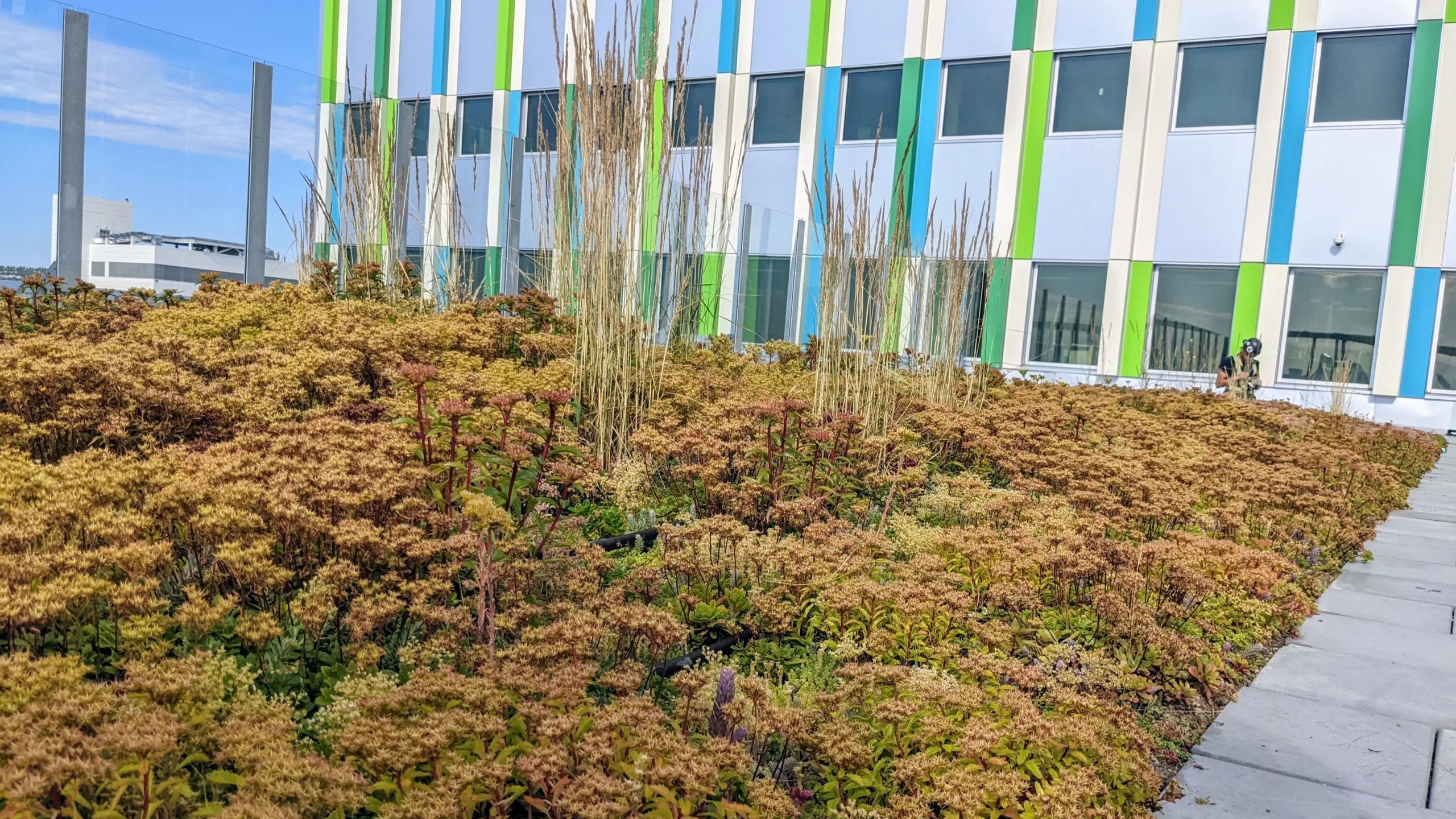
Calgary Cancer Center | Calgary, AB
Large-scale green roof supporting patient views and sustainability goals.
Landscape Quality Matters
While green roofs are not a standalone clinical intervention, they reinforce the broader ecosystem of care that shapes how patients feel, recover, and remember their experience.
In competitive healthcare markets where possessive patients’ evaluations, reputation, and differentiation matter, environment plays a measurable role. Facilities such as Calgary Cancer Center, Penn State Children’s Hospital, The Mayo Clinic and Columbia St. Mary’s Hospital illustrate how LiveRoof® rooftop landscapes can be meaningfully integrated into care environments within dense healthcare campuses.
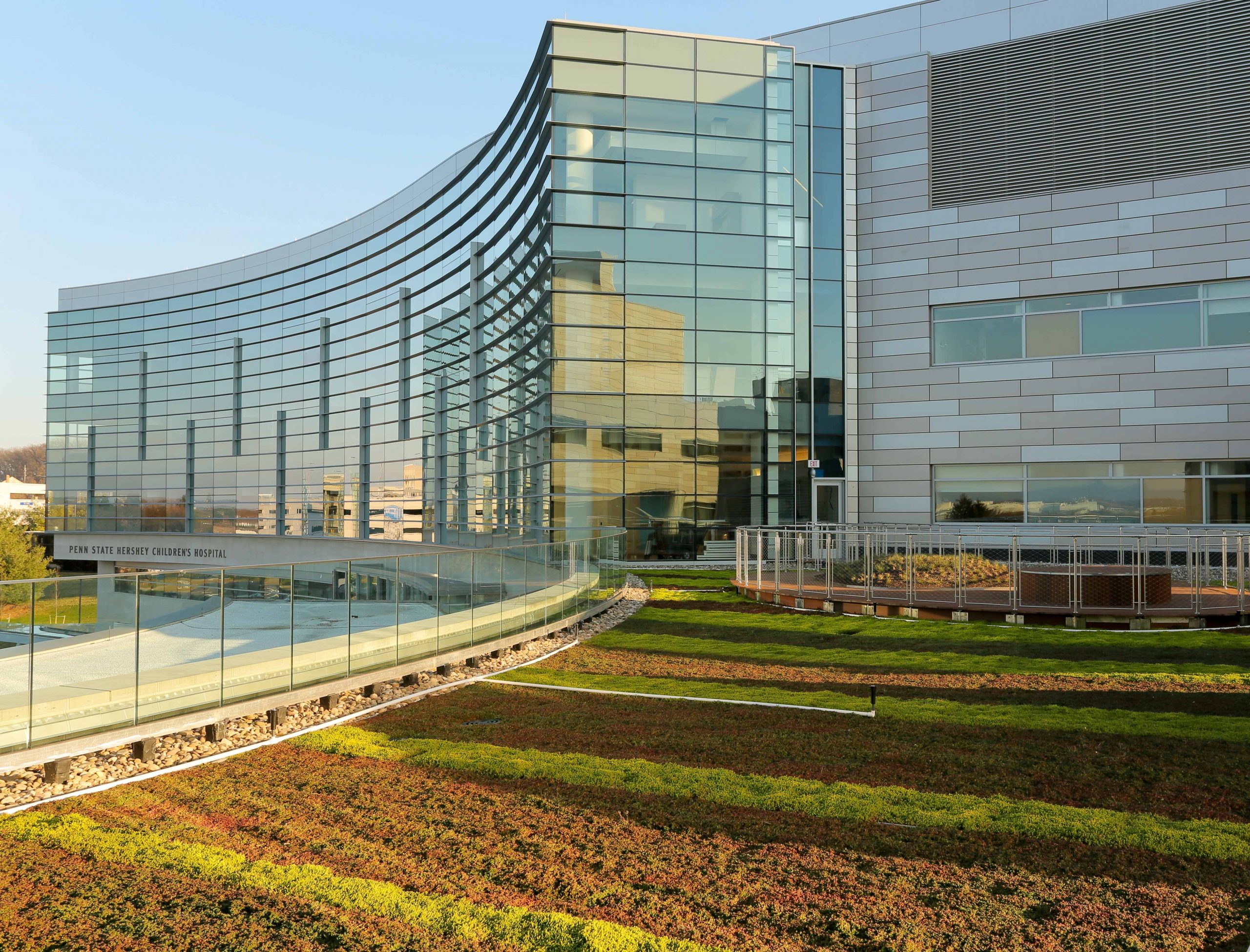
Penn State Children’s Hospital | Hershey, PA
Rooftop landscape providing restorative views for pediatric patients.
Extending Healing Beyond the Bedside
Healing does not occur in isolation: all aspects of the environment matter. As healthcare continues to evolve toward whole-person care, environments that reduce stress and foster calm become part of the care strategy itself. Green roofs allow healthcare organizations to transform overlooked space into visible, restorative infrastructure — supporting recovery even when patients cannot access outdoor gardens directly.
In our next article, we’ll explore how rooftop landscapes support not only patients, but the caregivers who serve them — contributing to staff resilience and retention in high-demand clinical environments.
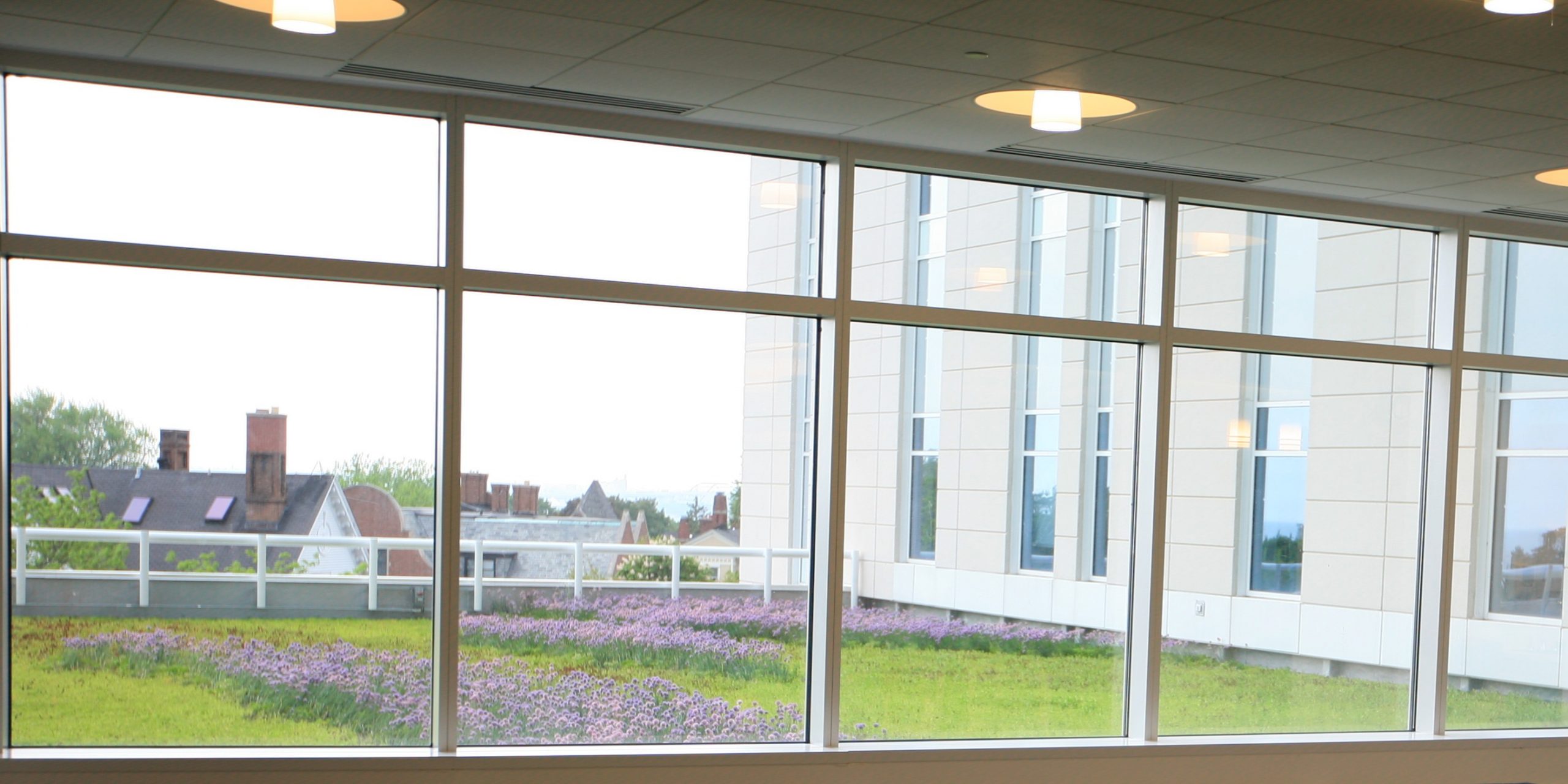
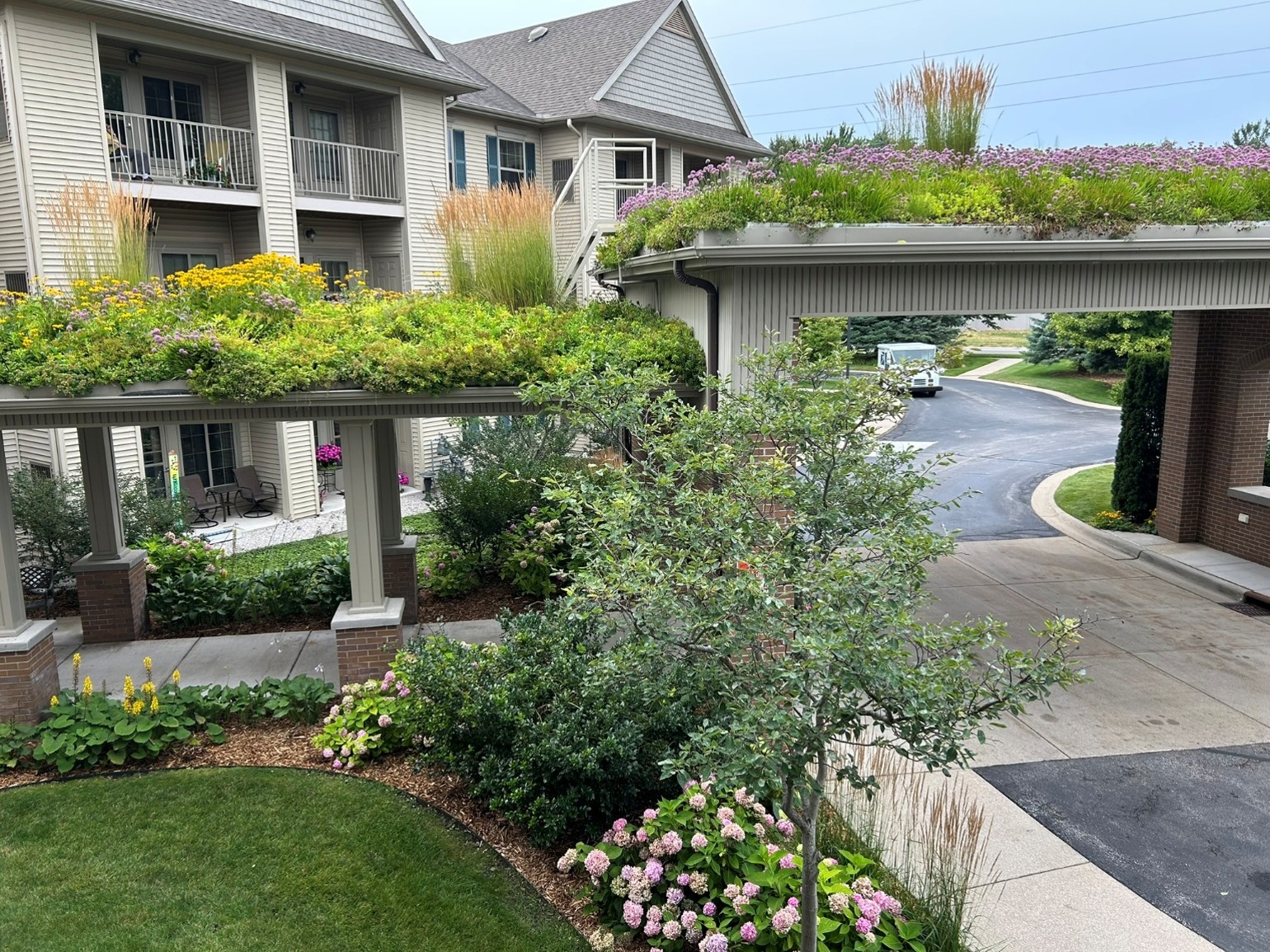
Columbia St. Mary’s | Milwaukee, WI
Urban rooftop planting system creating “borrowed nature” for inpatient rooms.
About this Series
Green Roofs as Healthcare Infrastructure explores how rooftop landscapes support patient recovery, staff resilience, environmental stewardship, and long-term campus performance. Across six articles, we examine why green roofs are becoming integral components of modern healthcare environments.
Jodi Griffin is the Business Development Manager for LiveRoof® Global. Questions about healthcare applications? Reach out anytime at jodi@liveroof.com.