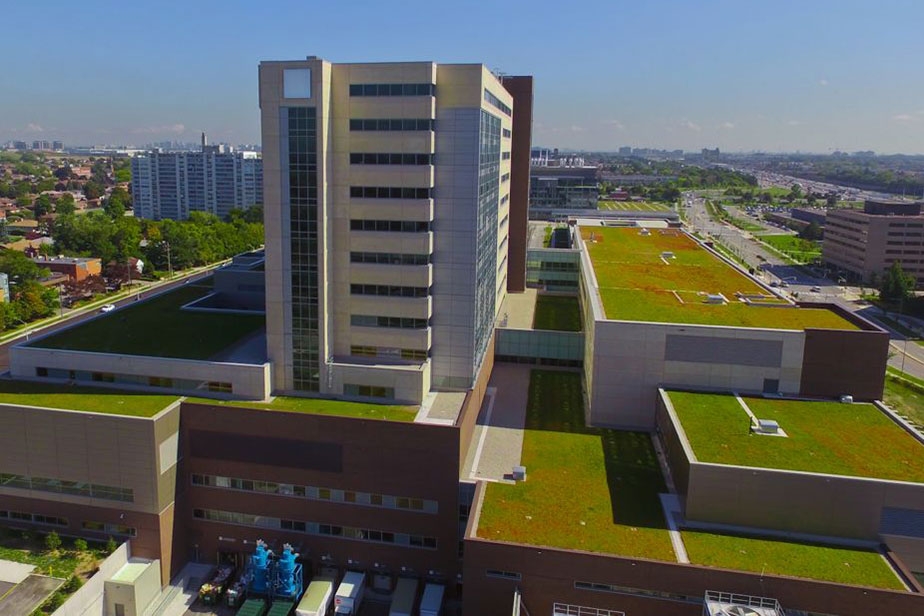
High winds present a significant design challenge for green roof assemblies. Wind pressure can displace growing media, stress vegetation, or uplift plants and soil if the system is not properly engineered. LiveRoof® has addressed these challenges through extensive testing, adherence to recognized design standards, and the development of a patented wind-resistant solution.
Wind Forces on Green Roofs
Wind pressure on rooftops is influenced by geographic location, terrain, building shape, slope, height, parapet design, and openings. The two primary forces of concern are:
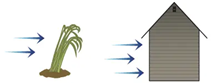
Positive Wind Pressure
Direct force exerted by wind striking a surface.
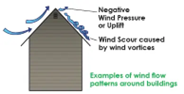
Negative Wind Pressure (Uplift)
Suction created when wind accelerates over roof edges or parapets, producing vortices that lift materials from the surface.
Uplift forces are typically greatest in roof corners, then along parapet walls, and least in the central “field” of the roof. High-rise buildings (>75 ft) are particularly susceptible to uplift, while low-rise buildings generally experience reduced forces.
Wind Resistance Testing
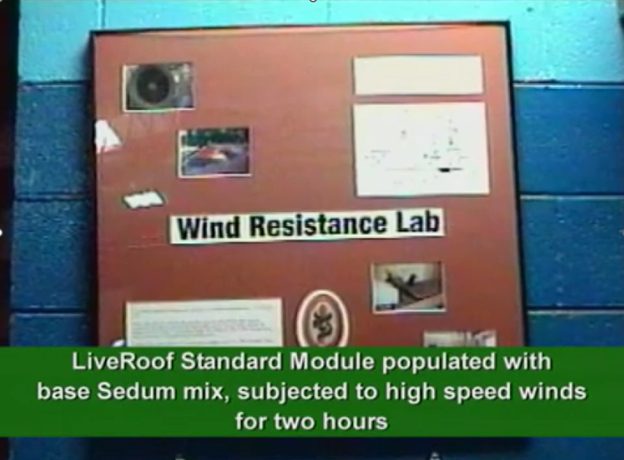
LiveRoof® Wind Test (2008)
- Modules planted with hardy sedums were tested in sustained winds exceeding 110 mph.
- Test setup: 4’ x 5’ planting surrounded by RoofEdge® edging.
- Results: After nearly 2 hours at 110+ mph, no growing medium was lost, and all plants remained rooted. Vegetation bent with the wind, demonstrating the stabilizing effect of full vegetation coverage.
CSA A123.24-15 (2015)
The Canadian Standards Association (CSA) introduced A123.24-15 to evaluate vegetated roof assemblies (VRAs) under simulated wind pressure and flow. LiveRoof® systems were tested at the National Research Council (NRC):
- Wind Pressure Test: Two assemblies sustained uplift pressures of 200 psf, with a certified resistance rating of 133 psf (6.36 kPa) after safety factors.
- Wind Flow Test: LiveRoof® withstood turbine-driven winds up to 210 km/h (turbine limit). The system was certified at 83 mph (133 km/h) flow resistance.
National Research Canada has published a wind-roof calculator on the internet for vegetated roofs to calculate roof cladding wind loads and vegetated roof assembly design parameters based on the National Building Code of Canada 201
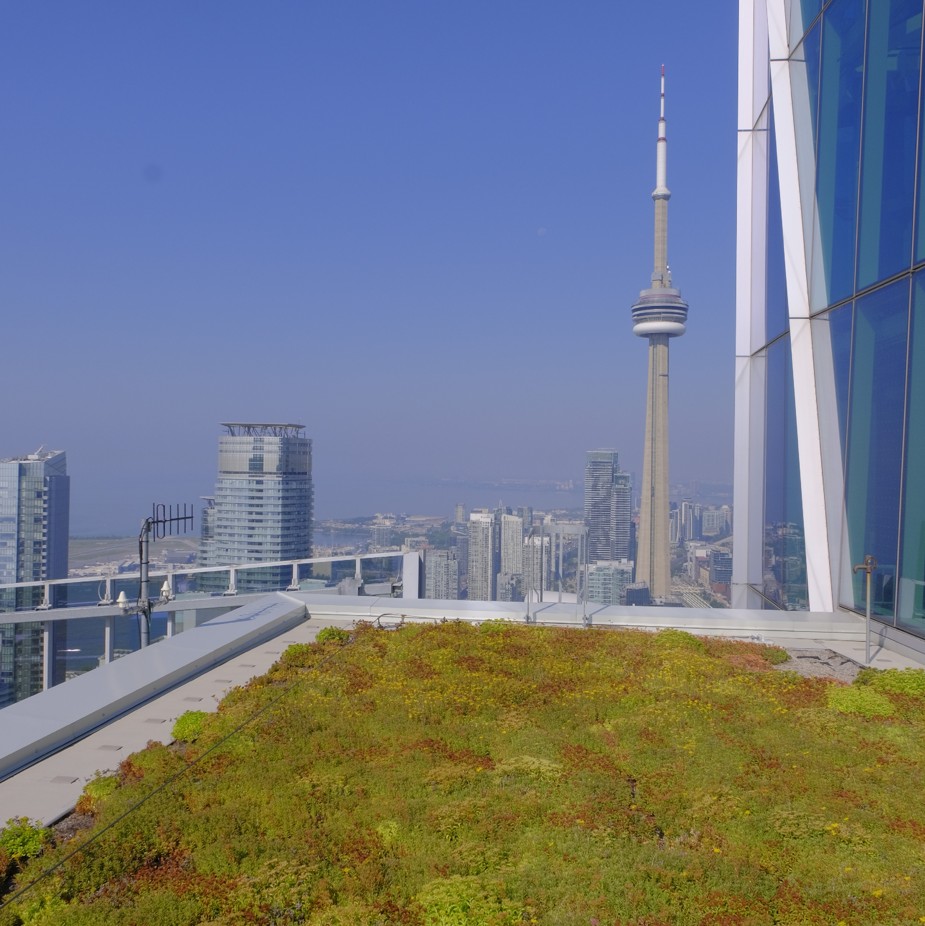
National Research
ANSI RP-14 (2010)
The American National Standards Institute RP-14 provides design and installation recommendations to mitigate wind uplift risk. LiveRoof® modules comply with RP-14 through their fully vegetated design, substantial weight, and overlapping lips that reduce direct wind exposure.
Design Standards and Considerations
System Weight and Ballast
- LiveRoof® Lite: ~10 lbs/sf dry weight – suitable for many applications but not recommended for extreme wind exposure.
- LiveRoof® Standard/Deep/Maxx: 18–40 lbs/sf dry weight – provide additional ballast for high-wind zones.
- In the most challenging applications, vegetation-free ballast zones may be implemented at corners and perimeters.
Parapet Design
- Low-rise buildings: Lower parapets may reduce turbulence; however, single parapets used decoratively can increase uplift in corners.
- High-rise buildings: Taller parapets (3 ft or higher) or porous screens reduce uplift, though they increase direct wind loading on the parapet. Specialized shapes such as saw-tooth or rounded parapets may further moderate uplift.
Tall Building Applications
Tall buildings (>20 stories) present three major challenges:
- Wind Uplift: Countered with WindDisc™, heavier modules, and perimeter ballast.
- Wind Scour: Minimized by maintaining full vegetative cover and remediating bare patches promptly.
- Plant Performance: Only hardy, cold-tolerant species should be used, supported by built-in irrigation.
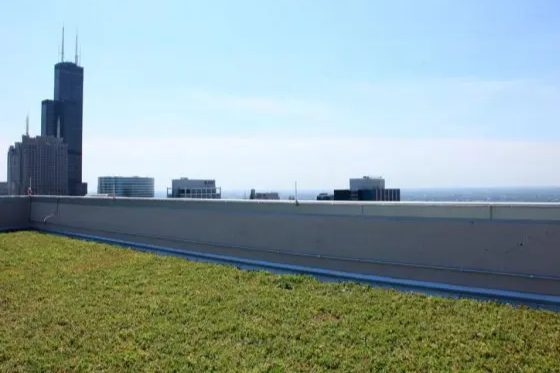
Case Study: 111 W. Wacker, Chicago (58 stories, 630 ft) – Installed in 2014 using WindDisc™ and a custom high-rise plant mix, which continues to perform in this extreme environment.
WindDisc™ – Patented Wind Uplift Solution
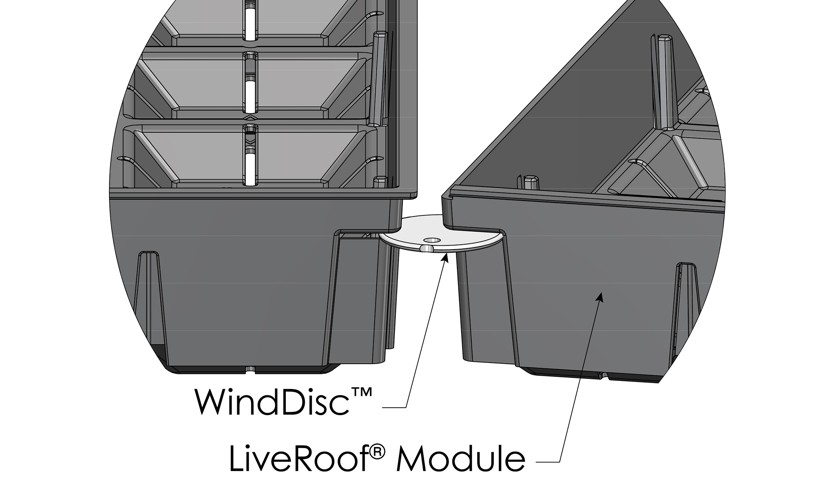
LiveRoof® developed WindDisc™ to mechanically link adjacent modules, significantly increasing uplift resistance:
- Full-scale testing achieved sustained 200 psf (9.6 kPa) resistance on Standard and Lite systems.
- Provides added security in uplift-prone zones such as building corners, perimeters, and high-rise rooftops.
- Recommended in hurricane-prone regions and for tall buildings.
Conclusion
LiveRoof® systems have been rigorously tested under both U.S. and Canadian standards to verify their performance against wind pressures and uplift forces. With options ranging from heavier system modules to patented WindDisc™ technology, LiveRoof® provides solutions for both low-rise and high-rise buildings, including those in hurricane-prone regions. When properly designed with attention to parapets, ballast, and plant selection, LiveRoof® delivers proven wind resistance and long-term system stability.
Do you have additional questions about wind issues on green roofs? Your local LiveRoof representative can help.
About This Series
This article is the second installment in The Science behind LiveRoof® System series, where we explore the technical advantages of the LiveRoof® systems.
Jodi Griffin, Business Development Manager for LiveRoof® Global. Questions? Reach out anytime at jodi@liveroof.com.